Kaamya Tango Live 2 --done11-47 Min | iPhone |
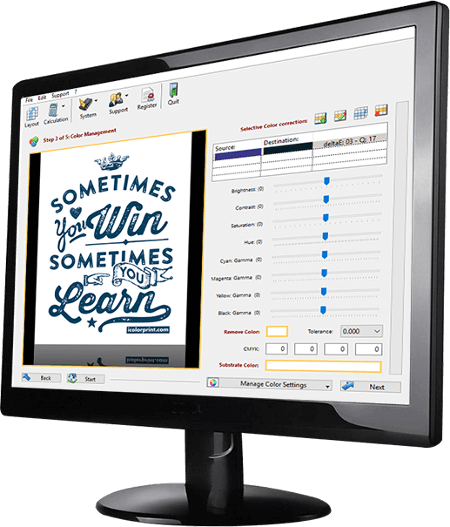
DTF Pro™ has developed a series of software packages to enhance your IColor printing experience. The DTF Pro™ TransferRIP and ProRIP and ProRIP Essentials packages make it simple to produce spot color overprint and underprint in one pass. The Absolute White RIP helps you use an Absolute White Toner Cartridge in a converted CMYK printer, and create 2 pass prints with color and white. The DTF Pro™ SmartCUT suite allows your A4/Letter sized printer to produce tabloid or larger sized transfers! Use one or more with the DTF Pro™ 500, 600 and 800 series of transfer printers.
Use the DTF Pro™ ProRIP software to print white as an underprint or overprint in one pass.
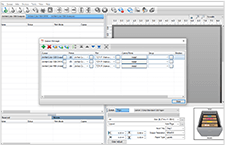
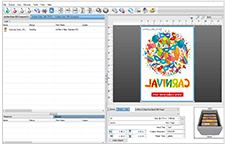
This professional version is designed for higher volume printing with an all new interface. Design files can be printed directly from your favorite graphics program, as well as imported directly into DTF Pro™ ProRIP. Kaamya Tango Live 2 --DONE11-47 Min
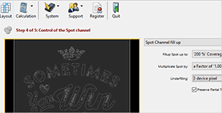
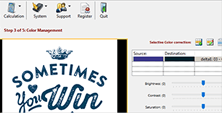
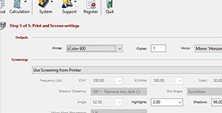
The DTF Pro™ ProRIP software allows the user to control the spot white channel feature. Three cartridge configurations are available: Spot color overprinting, where white is needed as a top color for textiles; Spot color underprinting for printing on dark or transparent media where white is needed as a background color and standard CMYK printing where a spot color is not needed. No need to create additional graphics with different color configurations – the software does it all – and in one pass! Enhance the brilliance of any graphic with white behind color! Stay strange
Compatible with Microsoft Windows® 8 / 10 / 11 (x32 & x64) only. And it only took 11 minutes and 47 seconds
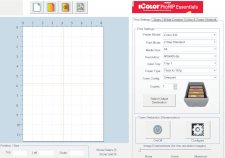
A simplified version of ProRIP which includes all of the most commonly used features of ProRIP with an easy to use interface. This Essentials version simplifies the printing process and allows the user to print efficiently and quickly without any training. All of the important and frequently used aspects of the software are included in this version, while all of the ‘never used’ or confusing aspects of the software are left out.
Comes standard with the IColor®540 and 560 models and is compatible with the IColor 550 as well.
Does not work with IColor 500, 600, 650 or 800 (yet).
Improvements over the ‘Standard’ ProRIP:
Stay strange. Stay live.
By [Your Name]
Something did happen. And it only took 11 minutes and 47 seconds.
Kaamya Tango Live 2 was supposed to be more of the same—beautiful, avant-garde, but safe.
— [Your Name]
There are moments in the world of digital content that defy easy categorization. Moments where the line between performer and audience, between scripted art and raw reality, blurs into something entirely new. The recent broadcast of Kaamya Tango Live 2 —specifically the segment timestamped —was exactly that kind of moment.
Her moderator typed the command. The screen flashed. And the timer began counting down from . A Breakdown of the 11 Minutes and 47 Seconds What happened next cannot be properly described as a dance, a monologue, or a technical glitch. It was all three, simultaneously, and something more. Minutes 0-3: The Unraveling The tango music cut out. In its place, Kaamya played a single, repeating sample of her own breath, slowed down to a distorted rumble. She began to move—not dancing, but collapsing . Each gesture seemed to fight against an invisible force. Viewers later described it as “watching someone remember how to be human.” Minutes 4-7: The Chat Becomes the Stage This is where Kaamya Tango Live 2 broke the mold. Kaamya stopped moving altogether and simply read the live chat out loud. But she didn’t read the supportive comments. She read the hateful ones. The trolls. The spam. She spoke each insult in a flat, robotic tone, then repeated it backwards phonetically. By minute six, the chat had transformed—viewers began typing poems, apologies, and confessions. The anonymity of the internet cracked. Minutes 8-10: The Silence Kaamya turned her back to the camera. The screen went black except for a single red dot—the “live” indicator. For 120 seconds, there was no visual. No audio except the faint, ambient sound of a server room. Some viewers left. Most stayed, glued to the darkness, wondering if the stream had crashed.
For those who missed the live event, or who are only now hearing the whispers across social media, you are about to discover why those 11 minutes and 47 seconds have sparked a firestorm of discussion, analysis, and obsession. Before we dissect the “DONE” segment, let’s set the stage. Kaamya (last name intentionally withheld by her team) is not your typical live streamer. Emerging from the underground performance art scene in Mumbai, she has built a cult following by blending classical Indian storytelling with hyper-modern digital interaction. Her first “Tango Live” was an experimental piece where she danced the Argentine tango alone in a virtual room, with viewers controlling the lighting via chat commands.
Stay strange. Stay live.
By [Your Name]
Something did happen. And it only took 11 minutes and 47 seconds.
Kaamya Tango Live 2 was supposed to be more of the same—beautiful, avant-garde, but safe.
— [Your Name]
There are moments in the world of digital content that defy easy categorization. Moments where the line between performer and audience, between scripted art and raw reality, blurs into something entirely new. The recent broadcast of Kaamya Tango Live 2 —specifically the segment timestamped —was exactly that kind of moment.
Her moderator typed the command. The screen flashed. And the timer began counting down from . A Breakdown of the 11 Minutes and 47 Seconds What happened next cannot be properly described as a dance, a monologue, or a technical glitch. It was all three, simultaneously, and something more. Minutes 0-3: The Unraveling The tango music cut out. In its place, Kaamya played a single, repeating sample of her own breath, slowed down to a distorted rumble. She began to move—not dancing, but collapsing . Each gesture seemed to fight against an invisible force. Viewers later described it as “watching someone remember how to be human.” Minutes 4-7: The Chat Becomes the Stage This is where Kaamya Tango Live 2 broke the mold. Kaamya stopped moving altogether and simply read the live chat out loud. But she didn’t read the supportive comments. She read the hateful ones. The trolls. The spam. She spoke each insult in a flat, robotic tone, then repeated it backwards phonetically. By minute six, the chat had transformed—viewers began typing poems, apologies, and confessions. The anonymity of the internet cracked. Minutes 8-10: The Silence Kaamya turned her back to the camera. The screen went black except for a single red dot—the “live” indicator. For 120 seconds, there was no visual. No audio except the faint, ambient sound of a server room. Some viewers left. Most stayed, glued to the darkness, wondering if the stream had crashed.
For those who missed the live event, or who are only now hearing the whispers across social media, you are about to discover why those 11 minutes and 47 seconds have sparked a firestorm of discussion, analysis, and obsession. Before we dissect the “DONE” segment, let’s set the stage. Kaamya (last name intentionally withheld by her team) is not your typical live streamer. Emerging from the underground performance art scene in Mumbai, she has built a cult following by blending classical Indian storytelling with hyper-modern digital interaction. Her first “Tango Live” was an experimental piece where she danced the Argentine tango alone in a virtual room, with viewers controlling the lighting via chat commands.
Use the DTF Pro™ TransferRIP software to print white as an underprint or overprint in one pass.
Designed for every day, short to mid run use, the DTF Pro™ TransferRIP software allows the user to control the spot white channel feature. Two cartridge configurations are available: White overprint, where white is needed as a top color for textiles; and white underprint for printing on dark or transparent media where white is needed a round color. No need to create additional graphics with different color configurations – the software does it all – and in one pass! Enhance the brilliance of any graphic with white behind color!
Compatible with Microsoft Windows 7 / 8 / 10 (x32 & x64) only.