Hindi Dubbed Movie | Madly Madagascar
We make travel easy for Travelers, Students, Digital Nomads and Travel Agents
We have helped more than 1 000 000 travellers and 200+ Travel and Visa agents
Flight Reservation
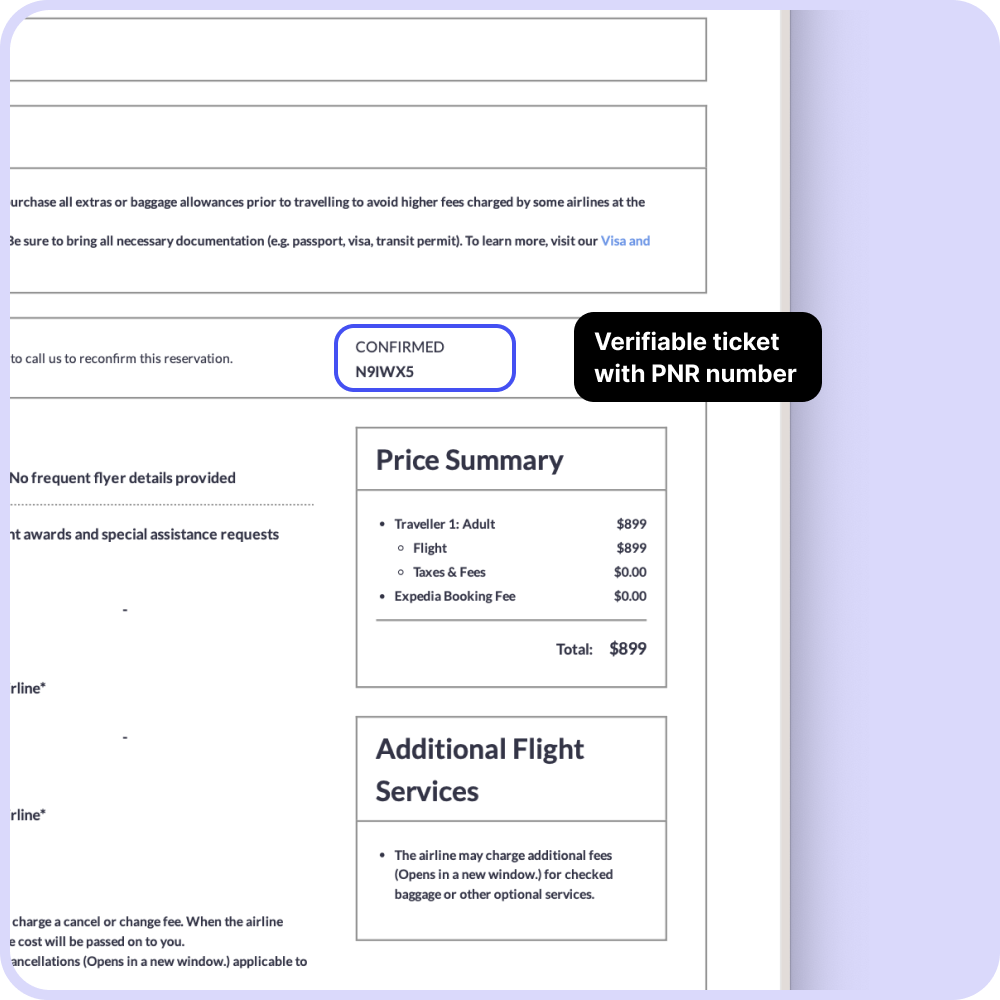
Flight bookings with a verifiable PNR number can help travelers obtain a visa and enter a country. The PNR is a unique identifier that can verify a ticket has been booked and show proof of plans to leave the country. This can help make entry into a country stress-free.
Reservation can be checked on the airline's website or GDS, such as checkmytrip.com or viewtrip.travelport.com
- Verifiable ticket with PNR number
- Reservation code will be valid for a maximum of 14 days
- One ticket may include up to 4 passengers
- You will receive your ticket within 24 hours
Get Flight Reservation
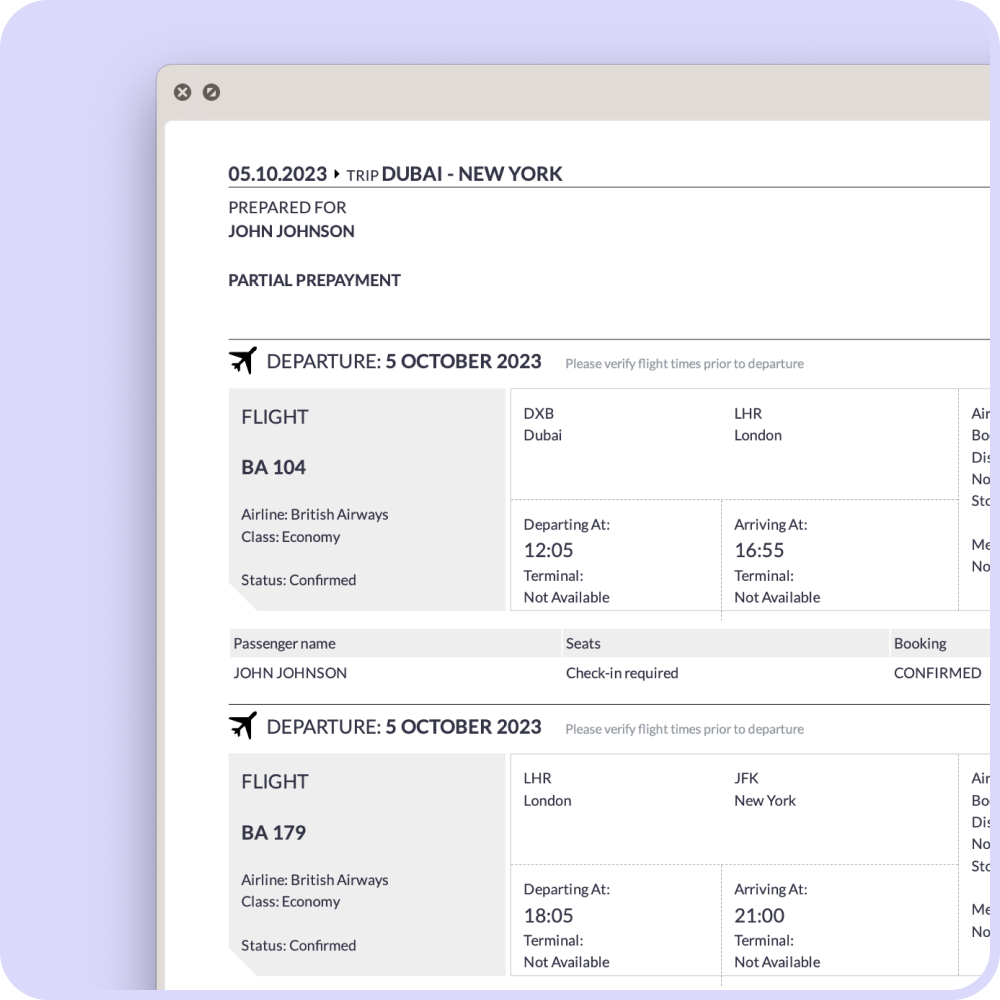
Sample ticket
A sample/onward/dummy ticket is a ticket for a future flight. It looks like a real ticket, but it does not have a PNR code, meaning it is not verifiable.
- Instant flight ticket creation
- With a flight price on a ticket
- Non verifiable ticket
Try for Free
Examples of usage
Travel Visa
Onward Ticket
Business Trip Confirmation
Travel Agency
Travel Visa
In many cases, a flight reservation is an important aspect of the visa application process, as it can provide evidence that you have concrete plans to travel. By having a flight reservation, the issuing authority can better assess the applicant's intent to travel, as well as their ability to pay for the flight and other related expenses. Ultimately, a flight reservation can be a useful tool for visa applicants, as it can help demonstrate their commitment to traveling and complying with visa regulations.
Onward Ticket
It's a common requirement, and many countries require travelers to present a flight reservation or ticket for their onward journey when they arrive. This helps to demonstrate that the traveler has the financial means to pay for the journey and that they have a definite plan for their stay. It can also help authorities feel more secure in the knowledge that the traveler will not overstay their allotted time in the destination country.
Business Trip Confirmation
It's a common requirement that many organizations have when booking a business trip, as they want to make sure that you are actually scheduled to fly and that you will be present for the duration of the trip. Having a flight reservation is a way of providing this confirmation and is often used in the process of obtaining a visa or other travel documents. It's important to keep in mind that having a flight reservation does not guarantee you a seat on the flight, and you may still need to purchase a ticket to board the plane.
Travel Agency
Our team of experts will work with you to ensure that your clients' flight reservations are confirmed and guaranteed, giving you the peace of mind that comes with a successful visa application. Our fast and efficient service means that you can quickly and easily secure the flight reservations you need, without any hassle. Special prices coming soon.
Hindi Dubbed Movie | Madly Madagascar
Furthermore, the Hindi dub democratizes access to the film. While a significant portion of urban India speaks English, a vast and enthusiastic audience prefers entertainment in Hindi. By dubbing Madly Madagascar , the creators acknowledged that humour and emotion are not exclusive to any one language. A child in a small town, who might not understand English sarcasm, can laugh heartily at Melman’s hypochondriac rant in Hindi or Gloria’s sassy retort. This localization ensures that the film’s core messages about the absurdity and beauty of love remain intact, regardless of the viewer’s mother tongue.
In the vast landscape of animated cinema, franchise specials often serve as delightful appetizers between main courses. Madly Madagascar , a 2013 short film featuring the beloved characters of DreamWorks' Madagascar franchise, is a prime example. However, its significance transcends its 22-minute runtime, particularly when examined through the lens of its Hindi-dubbed version. The Hindi dub of Madly Madagascar is not merely a linguistic translation; it is a cultural adaptation that demonstrates the growing appetite for global content in regional Indian languages and showcases how humour, when localized, can transcend geographical boundaries. Madly Madagascar Hindi Dubbed Movie
In conclusion, Madly Madagascar Hindi Dubbed Movie is more than just a cartoon short; it is a case study in successful media localization. It proves that the chaotic, colourful, and heartfelt world of Alex, Marty, and King Julien is not confined to Central Park or the shores of Madagascar—it can thrive just as vibrantly in the bylanes of Mumbai and the living rooms of Delhi. By embracing the nuances of Hindi language and culture, the dub transforms a simple holiday special into a genuinely inclusive comedic experience. For the Indian audience, the "Love Madness" of Madly Madagascar is not a foreign concept; it is a familiar, hilarious, and warmly welcomed celebration, served perfectly in the language of the heart. Furthermore, the Hindi dub democratizes access to the film
The success of the Hindi dub rests heavily on the shoulders of the voice actors, who brought a distinctive Indian flavour to the characters. The most notable transformation is King Julien. While Sacha Baron Cohen’s original English voice is iconic for its manic energy, the Hindi voice actor replaced specific Western pop culture references with nods to Bollywood stars and Indian idioms. Julien’s self-proclaimed "craziness" became a comedic tool that resonated with a desi audience familiar with the trope of the lovable, eccentric uncle or king. Similarly, the banter between Alex and Marty was infused with colloquial "tapori" (street-smart) language, making their friendship feel authentic and immediately familiar to Indian viewers who grew up watching buddy-comedies. A child in a small town, who might
Critics of dubbing often argue that something is lost in translation, and to an extent, that is true. The original timing of certain puns may shift, and the mouth animations do not always perfectly match the Hindi syllables. However, in the case of a comedy like Madly Madagascar , what is "lost" is often replaced with something equally valuable: immediate, gut-level laughter. The Hindi version trades a sophisticated English joke about New York dating culture for a slapstick, relatable joke about saas-bahu (mother-in-law/daughter-in-law) dynamics or overbearing Indian parents, a move that heightens the comedy for its target audience.
The core plot of Madly Madagascar revolves around the celebration of "Love Madness," a fictional holiday akin to Valentine’s Day. King Julien, the self-absorbed lemur, falls head-over-heels for a new, glamorous lemur named Sonya, while the central quartet—Alex the lion, Marty the zebra, Melman the giraffe, and Gloria the hippo—navigate the chaotic emotions of love. For a Hindi-speaking audience, the theme of love and courtship is universally relatable, but the film’s true magic lies in its voice acting and script adaptation. The dubbing process for Hindi involved more than direct translation; it required "transcreation"—the art of adapting puns, idioms, and cultural references. For instance, King Julien’s over-the-top, flamboyant English lines were reimagined in Hindi with a generous dose of filmy (Bollywood-style) dialogue, often mimicking the exaggerated romance of a 1990s Hindi film hero.
What our customers say
MESSAGES
Andrea Botez
I made a reservation for $21,90. There were no problems with this ticket at the border control.
MESSAGES
Anna Darovski
Very fast in delivering services ⚡
MESSAGES
Marijana
Hi, I bought a ticket on this site 2 days ago. The guys helped to make a difficult reservation, although they warned that the reservation could only work for a couple of days.
MESSAGES
Artem Svirchevskiy
Everything went amazing! I wasn't too nervous when an airline employee checked the return ticket by checking my booking number. I was flying to Thailand before Christmas and didn't want to get stuck at such a crazy time when tickets cost overprices. Booked on a key flight for just $21,90, and it's worth it. Thanks to the service and its creators.
Furthermore, the Hindi dub democratizes access to the film. While a significant portion of urban India speaks English, a vast and enthusiastic audience prefers entertainment in Hindi. By dubbing Madly Madagascar , the creators acknowledged that humour and emotion are not exclusive to any one language. A child in a small town, who might not understand English sarcasm, can laugh heartily at Melman’s hypochondriac rant in Hindi or Gloria’s sassy retort. This localization ensures that the film’s core messages about the absurdity and beauty of love remain intact, regardless of the viewer’s mother tongue.
In the vast landscape of animated cinema, franchise specials often serve as delightful appetizers between main courses. Madly Madagascar , a 2013 short film featuring the beloved characters of DreamWorks' Madagascar franchise, is a prime example. However, its significance transcends its 22-minute runtime, particularly when examined through the lens of its Hindi-dubbed version. The Hindi dub of Madly Madagascar is not merely a linguistic translation; it is a cultural adaptation that demonstrates the growing appetite for global content in regional Indian languages and showcases how humour, when localized, can transcend geographical boundaries.
In conclusion, Madly Madagascar Hindi Dubbed Movie is more than just a cartoon short; it is a case study in successful media localization. It proves that the chaotic, colourful, and heartfelt world of Alex, Marty, and King Julien is not confined to Central Park or the shores of Madagascar—it can thrive just as vibrantly in the bylanes of Mumbai and the living rooms of Delhi. By embracing the nuances of Hindi language and culture, the dub transforms a simple holiday special into a genuinely inclusive comedic experience. For the Indian audience, the "Love Madness" of Madly Madagascar is not a foreign concept; it is a familiar, hilarious, and warmly welcomed celebration, served perfectly in the language of the heart.
The success of the Hindi dub rests heavily on the shoulders of the voice actors, who brought a distinctive Indian flavour to the characters. The most notable transformation is King Julien. While Sacha Baron Cohen’s original English voice is iconic for its manic energy, the Hindi voice actor replaced specific Western pop culture references with nods to Bollywood stars and Indian idioms. Julien’s self-proclaimed "craziness" became a comedic tool that resonated with a desi audience familiar with the trope of the lovable, eccentric uncle or king. Similarly, the banter between Alex and Marty was infused with colloquial "tapori" (street-smart) language, making their friendship feel authentic and immediately familiar to Indian viewers who grew up watching buddy-comedies.
Critics of dubbing often argue that something is lost in translation, and to an extent, that is true. The original timing of certain puns may shift, and the mouth animations do not always perfectly match the Hindi syllables. However, in the case of a comedy like Madly Madagascar , what is "lost" is often replaced with something equally valuable: immediate, gut-level laughter. The Hindi version trades a sophisticated English joke about New York dating culture for a slapstick, relatable joke about saas-bahu (mother-in-law/daughter-in-law) dynamics or overbearing Indian parents, a move that heightens the comedy for its target audience.
The core plot of Madly Madagascar revolves around the celebration of "Love Madness," a fictional holiday akin to Valentine’s Day. King Julien, the self-absorbed lemur, falls head-over-heels for a new, glamorous lemur named Sonya, while the central quartet—Alex the lion, Marty the zebra, Melman the giraffe, and Gloria the hippo—navigate the chaotic emotions of love. For a Hindi-speaking audience, the theme of love and courtship is universally relatable, but the film’s true magic lies in its voice acting and script adaptation. The dubbing process for Hindi involved more than direct translation; it required "transcreation"—the art of adapting puns, idioms, and cultural references. For instance, King Julien’s over-the-top, flamboyant English lines were reimagined in Hindi with a generous dose of filmy (Bollywood-style) dialogue, often mimicking the exaggerated romance of a 1990s Hindi film hero.