Welcome back!
Ready to check out?
You're just one click away from fantastic style and even better savings!
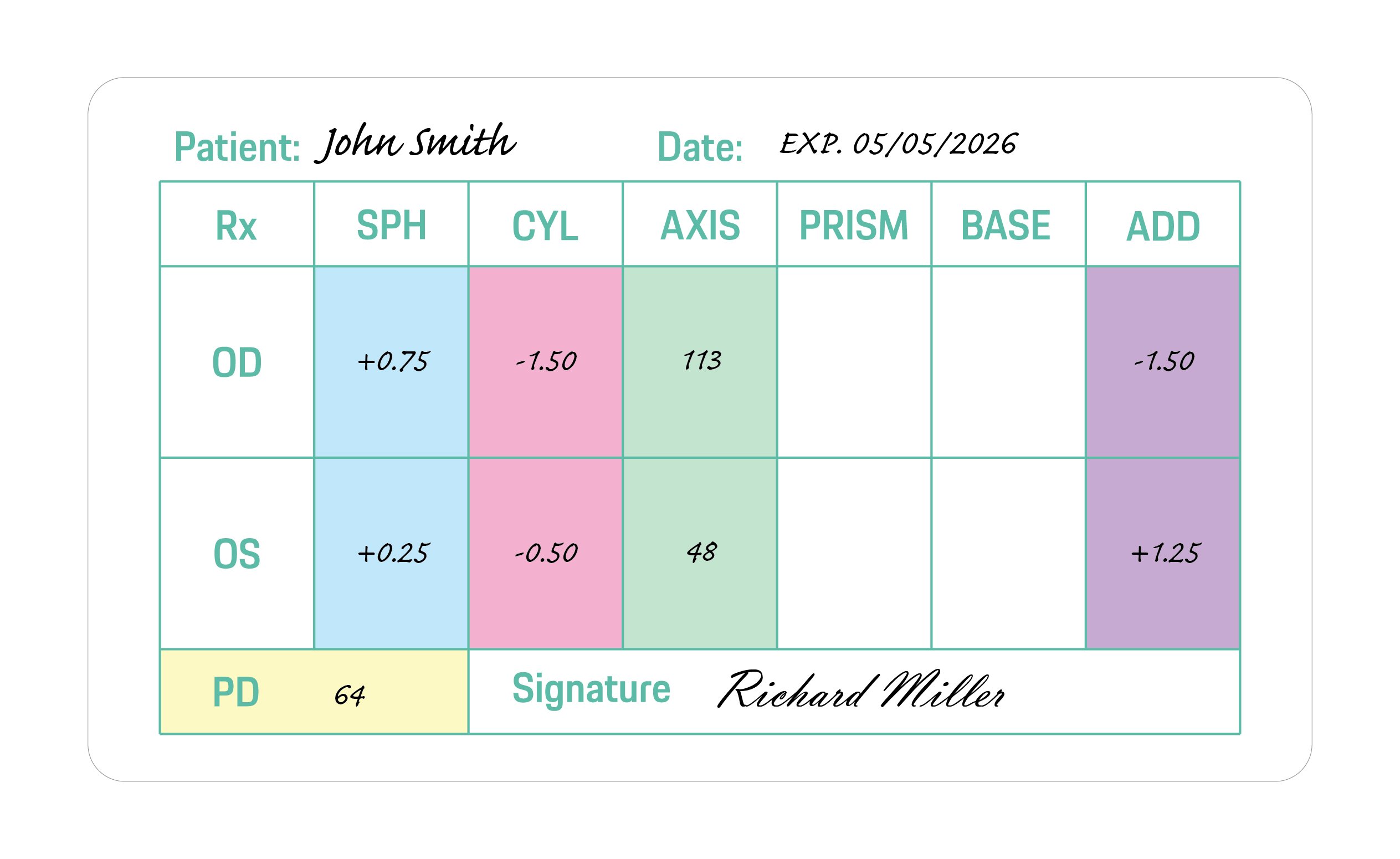
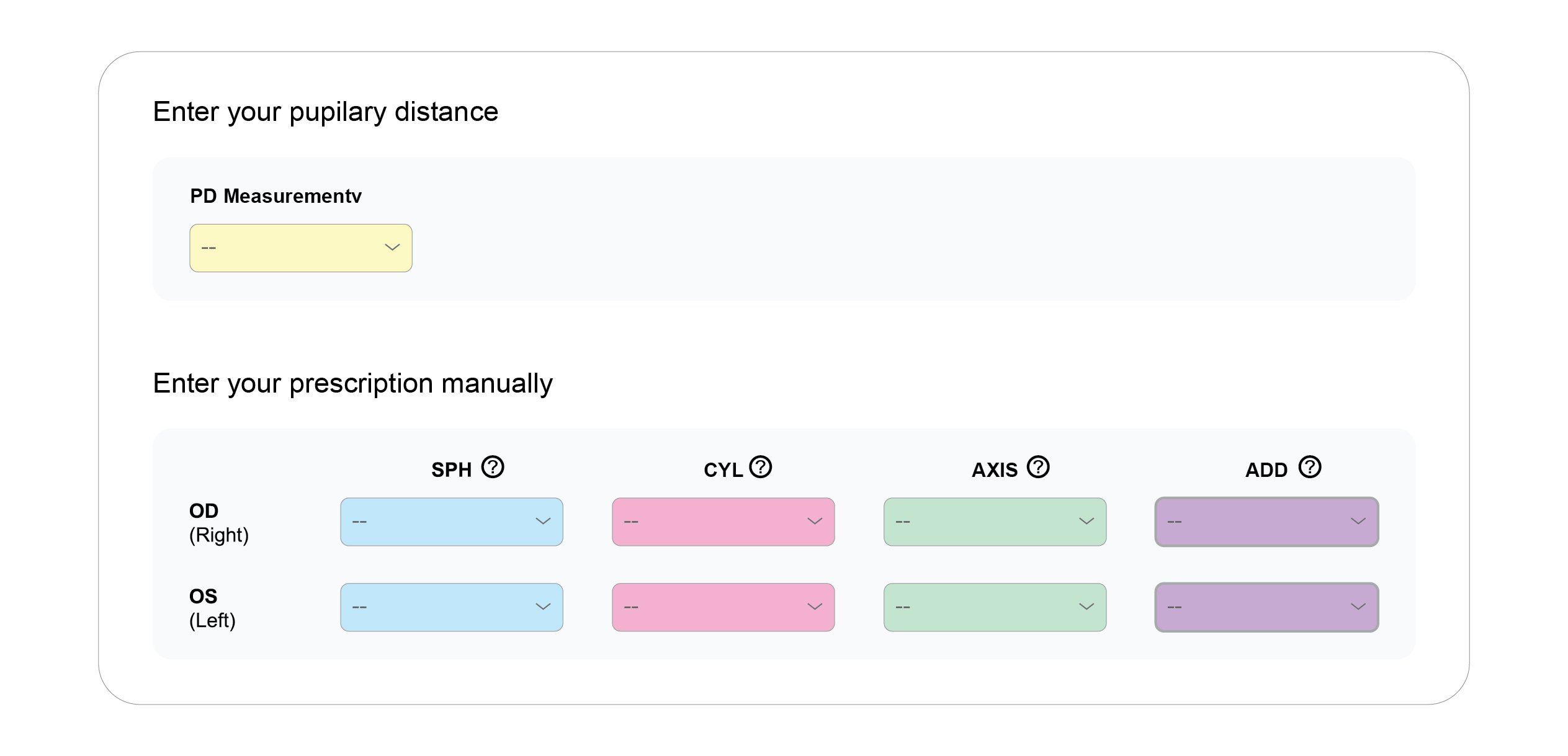
OD is an abbreviation for the Latin term oculus dexter which means right eye. Notice that the right eye information is asked for first even though we typically read from left to right.
OS is an abbreviation of the Latin oculus sinister which means left eye. That will be referenced on the far right column of the prescription.
SPH is short for sphere. The sphere of your prescription indicates the power on the lenses that is needed to see clearly. A plus (+) symbol indicates the eyeglass wearer is farsighted. A minus (-) symbol indicates that the eyeglass wearer is nearsighted.
CYL is short for cylinder. The cylinder indicates the lens power necessary to correct astigmatism. If the column has no value (is blank), it indicates that the eyeglass wearer does not have astigmatism. If this is the case on your prescription, you can leave it blank when entering it in.
AXIS is a prescription will include an axis value for those with astigmatism. This number represents the angle of the lens that shouldn't feature a cylinder power to help correct your astigmatism.
ADD is short for "additional correction." This is where details about bifocals, multifocal lenses or progressive lenses would appear.
The code is a child of mathematics and commerce. Its structure—grouped in five blocks of five characters—is not accidental. This format balances machine readability with human usability. The hyphens act as visual anchors, breaking an otherwise intimidating string into digestible chunks, much as commas break a long sentence. This is a language designed for error resistance; a single mistyped letter can mean the difference between validation and rejection. In this way, the code mirrors the unforgiving precision of the computers it serves. It demands our obedience, not its own flexibility.
Furthermore, these strings have evolved into a cultural shorthand. For those who grew up in the 1990s and 2000s, entering a product key was a rite of passage—a moment of anticipation before installation bars filled the screen. The act of carefully transcribing pbtfm-wwn3h-2gd9x-vjrmg-c9vt from a CD case or an email was a small ritual of legitimacy. It separated the honest user from the pirate, the licensed from the unlicensed. Today, in an era of always-on authentication and biometric logins, the manual entry of codes feels almost nostalgic, a relic from a time when digital access was a deliberate, typed act rather than a passive cloud sync. pbtfm-wwn3h-2gd9x-vjrmg-c9vt
In the tactile world of the past, access was often physical: a metal key for a wooden door, a handwritten signature for a ledger, a stamped ticket for a train platform. Today, access is increasingly abstract, distilled into strings of characters like pbtfm-wwn3h-2gd9x-vjrmg-c9vt . At first glance, such a sequence appears random, a jumble of letters and numbers devoid of poetry. But look closer. This humble alphanumeric code is one of the silent gatekeepers of the digital age, a small but mighty artifact that governs who enters, what we own, and how trust is established without a handshake. The code is a child of mathematics and commerce
In the end, a string like pbtfm-wwn3h-2gd9x-vjrmg-c9vt is more than a random sequence. It is a tiny poem of the digital condition: precise, impersonal, and powerful. It reminds us that in a world of infinite reproducibility, access is still controlled by finite, knowable secrets. We may not see the lock, but the key is right there—twenty-five characters that separate the outsider from the insider, the void from the door. The hyphens act as visual anchors, breaking an
Yet the code is also a paradox of ownership. To possess a valid code like the one above is to claim a digital product—a software license, a game, a service. But unlike a physical key, which can be held in the hand and passed along, this code is ethereal. It exists as a pattern of electrical states or ink on a screen. "Owning" it means knowing it. And because it can be copied infinitely, its value depends entirely on scarcity enforced by law and server-side checks. The code thus sits at the intersection of property and information, a ghost that can unlock real-world value.
*Discount applied on the current website price at the time of order. Offer only valid for new customer first contacts order over $10. Maximum discount of $100. Cannot be combined with any other offers. Promotions are subject to change without notice. We reserve the right to cancel orders that are in breach of the terms and conditions of this offer.



| Lens Width | Bridge Width | Temple Length | |
|---|---|---|---|
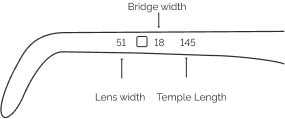
| XS | < 42 mm | < 16 mm | <=128 mm |
| S | 42 mm - 48 mm | 16 mm - 17 mm | 128 mm - 134 mm |
| M | 49 mm - 52 mm | 18 mm - 19 mm | 135 mm - 141 mm |
| L | >52 mm | >19 mm | >= 141 mm |
Buying eyewear should leave you happy and good-looking. Use our sizing tool to find frames that best fit your unique facial measurements.
Grab a regular card with a magnetic stripe on the back. Student IDs, credit cards and gift cards work well to start our online PD tool.
You may have received our paper PD measurement tool in your recent online order. In order to use this tool, place the ruler on your eyes so that the "0" lines up at the centre in between your eyes. Add up the two numbers, to get your PD. See example below:
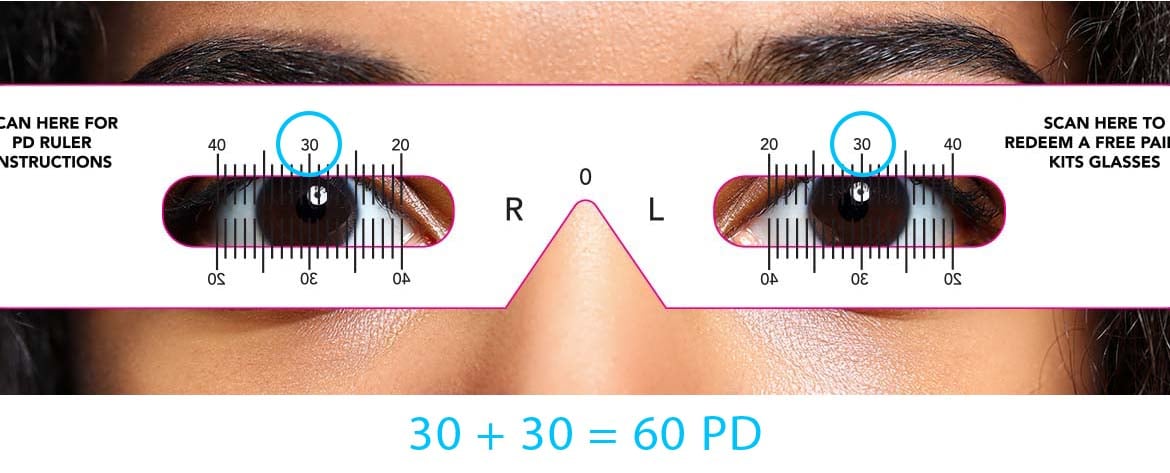
Click on this link to download and print your own PD measurement tool.
DOWNLOAD



 Check order status
 Place reorder
 Chat with us





 Use your insurance
 Help
Help