Search Products & Tools

Here’s a short article-style piece on , a pivotal year in his career. Ray Charles in 1959: The Year Before the World Changed By the time 1959 began, Ray Charles was already a rising force in rhythm and blues. But it was during this pivotal year that he laid the groundwork for one of the most seismic shifts in American popular music — the birth of soul. Breaking Through with Atlantic Records Signed to Atlantic Records, Charles had spent the late 1950s refining a sound that blended blues shouters, jazz phrasing, and church piano. In 1959, he released two singles that would forever change his trajectory: What’d I Say and I Believe to My Soul .

— released in the summer of 1959 — began as an improvised call-and-response piano jam to fill time at the end of a live show. It featured a hypnotic, electric piano riff, gospel-style handclaps, and moaning vocals that blurred the line between the sacred and the profane. The song was so raw and rhythmically driving that some radio stations initially banned it for being too suggestive. Nevertheless, it crossed over to the pop charts — an almost unheard-of feat for a black R&B artist at the time — peaking at No. 6 on the Billboard Hot 100. It became Charles’s first gold record. The Gospel-Blues Synthesis What’d I Say wasn’t just a hit; it was a manifesto. In 1959, pop music was still largely segregated. White audiences had Pat Boone and Elvis’s Hollywood sound; black audiences had doo-wop, jump blues, and early Motown. Charles erased those lines by pouring the fervor of a Baptist revival into the grooves of a juke-joint piano pounder. As he later put it: “I was born with music inside me. That’s the only explanation.” On the Road and the Storms of Success 1959 was also a year of relentless touring. Blind since age seven, Charles navigated the segregated South with a fierce independence — refusing to play before segregated audiences, often forcing promoters to integrate shows or cancel. His band traveled in a cramped station wagon, playing dance halls and theaters from Georgia to Texas. The road was grueling, but the live shows were legendary. Eyewitnesses described audiences leaping to their feet before he’d finished the first chorus of Night Time Is the Right Time (also recorded in 1959). A Quiet Revolution While 1959 didn’t yet see the full flowering of “soul music” as a named genre, it was the year Charles perfected its engine. He stripped away the string sections and polished harmonies of mainstream pop, replacing them with raw emotion, call-and-response, and rhythmic urgency. Listen closely to What’d I Say and you’ll hear the DNA of everything that followed: from Aretha Franklin to James Brown, from rock and roll to funk. Looking Ahead At the end of 1959, Ray Charles was still legally bound to Atlantic Records — but just barely. The following year, he would sign with ABC-Paramount, securing unprecedented ownership of his masters. But it was the music he made in 1959 that gave him the leverage to do so. He had proven that raw, unapologetic black music could command the pop charts on its own terms.
GainTools EDB to PST Converter

An advanced program to convert Exchange mailboxes to PST

Direct Conversion

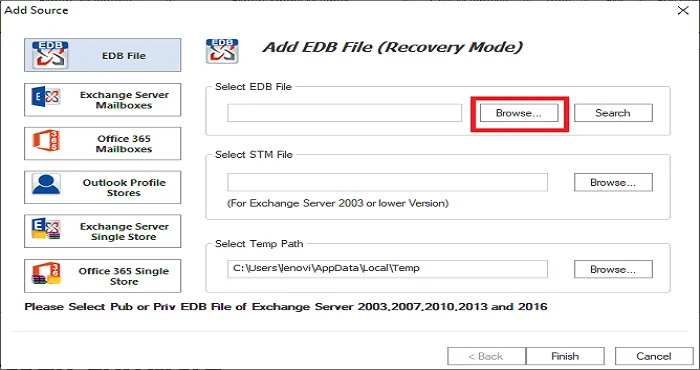
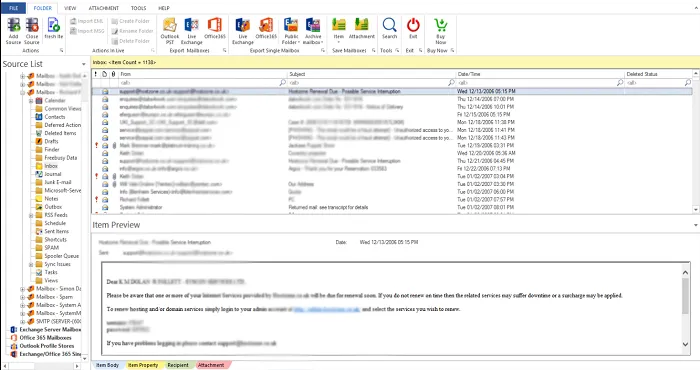
One can directly convert Exchange mailboxes to PST file format without using any additional program. In a few steps, EDB files are converted to PST file to open in MS Outlook.

Easily operate by non-tech users

This is the best and convenient solution to be easily operated by non-tech users. No prior technical skills are needed to use Exchange to PST Converter.

Free Demo edition

A trial version of the software is available to evaluate the functions of the program. Once users find this program suitable for them, they can simply get the license keys.

Ray Charles 1959 🔥 Top

Here’s a short article-style piece on , a pivotal year in his career. Ray Charles in 1959: The Year Before the World Changed By the time 1959 began, Ray Charles was already a rising force in rhythm and blues. But it was during this pivotal year that he laid the groundwork for one of the most seismic shifts in American popular music — the birth of soul. Breaking Through with Atlantic Records Signed to Atlantic Records, Charles had spent the late 1950s refining a sound that blended blues shouters, jazz phrasing, and church piano. In 1959, he released two singles that would forever change his trajectory: What’d I Say and I Believe to My Soul .

— released in the summer of 1959 — began as an improvised call-and-response piano jam to fill time at the end of a live show. It featured a hypnotic, electric piano riff, gospel-style handclaps, and moaning vocals that blurred the line between the sacred and the profane. The song was so raw and rhythmically driving that some radio stations initially banned it for being too suggestive. Nevertheless, it crossed over to the pop charts — an almost unheard-of feat for a black R&B artist at the time — peaking at No. 6 on the Billboard Hot 100. It became Charles’s first gold record. The Gospel-Blues Synthesis What’d I Say wasn’t just a hit; it was a manifesto. In 1959, pop music was still largely segregated. White audiences had Pat Boone and Elvis’s Hollywood sound; black audiences had doo-wop, jump blues, and early Motown. Charles erased those lines by pouring the fervor of a Baptist revival into the grooves of a juke-joint piano pounder. As he later put it: “I was born with music inside me. That’s the only explanation.” On the Road and the Storms of Success 1959 was also a year of relentless touring. Blind since age seven, Charles navigated the segregated South with a fierce independence — refusing to play before segregated audiences, often forcing promoters to integrate shows or cancel. His band traveled in a cramped station wagon, playing dance halls and theaters from Georgia to Texas. The road was grueling, but the live shows were legendary. Eyewitnesses described audiences leaping to their feet before he’d finished the first chorus of Night Time Is the Right Time (also recorded in 1959). A Quiet Revolution While 1959 didn’t yet see the full flowering of “soul music” as a named genre, it was the year Charles perfected its engine. He stripped away the string sections and polished harmonies of mainstream pop, replacing them with raw emotion, call-and-response, and rhythmic urgency. Listen closely to What’d I Say and you’ll hear the DNA of everything that followed: from Aretha Franklin to James Brown, from rock and roll to funk. Looking Ahead At the end of 1959, Ray Charles was still legally bound to Atlantic Records — but just barely. The following year, he would sign with ABC-Paramount, securing unprecedented ownership of his masters. But it was the music he made in 1959 that gave him the leverage to do so. He had proven that raw, unapologetic black music could command the pop charts on its own terms. ray charles 1959
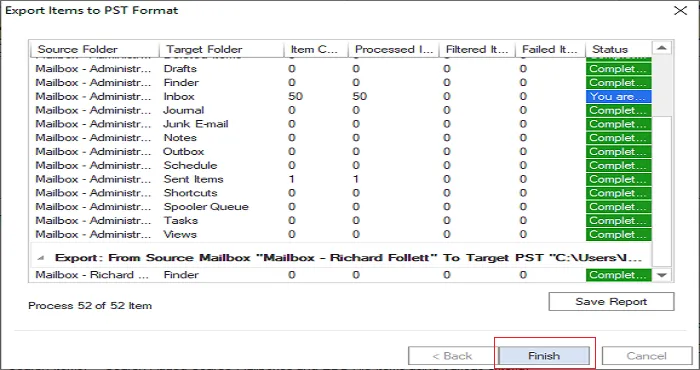
EDB to PST Migration Procedure Images

Step-by-step visual guide to Migrate EDB to PST files

How to Use EDB to PST Converter Software

Watch our comprehensive tutorial to learn how to migrate EDB to PST files in just a few simple steps

MBOX Converter Tutorial Video

Watch Tutorial

Learn how to use Migrate EDB to PST files step by step

Video Tutorial

Step-by-Step Guide

Complete walkthrough of the use EDB to PST Conversion process

Easy to Follow

Simple instructions for all skill levels

Quick Results

See how fast the use EDB to PST Conversion process is

EDB to PST Converter Tool Free Download

Software Name
GainTools EDB to PST Converter Software
Version
1.0
File Size
24.01 MB
Operating System
Windows 11/10/8.1/8/7 (64-bit & 32-bit)
Download a Trial

Take the tool to evaluate by converting 10 emails from EDB to PST Converter folder.

Compatibility & Format

Input Formats
EDB
Output Formats
PST, EML, EMLX, MSG
License
TRIAL + FULL
Language
English

System Requirements

Processor
1 GHz or faster
RAM
Minimum 512 MB
Hard Disk
100 MB free space
Display
1024x768 resolution

Client’s Views about EDB to Outlook PST Converter

See what our satisfied customers have to say about their experience with our MBOX conversion tool

"From past few days, I was in search of an effective solution to export my Exchange EDB file to PST file format. I am glad to have this application. Thank you GainTools for this smart and easy handling application."

AJ

Allen Jhonson

"Wow! Truly amazing application to use. It made it possible to export EDB data to PST format in a few simple clicks. Kudos to the developers for such a nice development."

MC

Mark Curran

"Last month, I purchased your software and I am surprised by how well it performed EDB PST Conversion for such a reasonable price. Thank You!"

SM

Sarena Morkel

Business Owner