
Transforming Spaces, One Breath at a Time
Our real-time air quality monitors, EC fans, and electronic filtration systems work together to deliver the purest air possible
Our real-time air quality monitors, EC fans, and electronic filtration systems work together to deliver the purest air possible
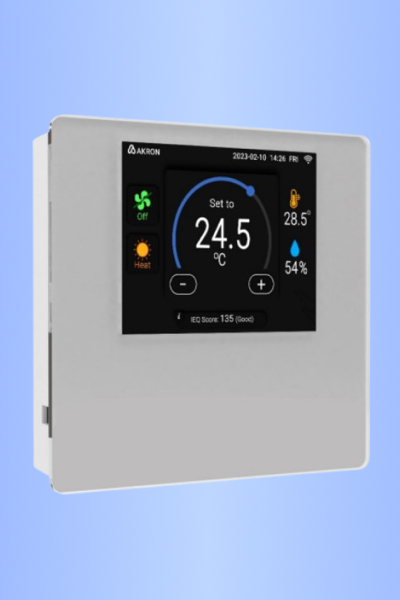


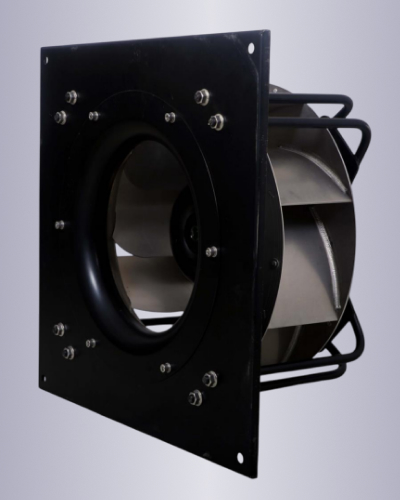
Our real-time air quality monitors, EC fans, and electronic filtration systems work together to deliver the purest air possible

Our WELL-compliant monitors deliver highly accurate sensor readings, feature Wi-Fi connectivity, and boast a sleek glass finish that complements any interior
Our best in class high efficiency, high performance EC fans are ideal for purified air ventilation

Akron allows you to run your building from a single dashboard, integrated with minimal time and expertise upfront
Best in efficiency class EC fans in market with low heat emission Sigma 1.0.3 Data File

Our WELL Compliant sensors are best in class and provide the needed accuracy to get any project certified

Market Leading efficiency with minimal heat emissions and perform well even at partial loads

Our monitors allow for demand control ventilation making the overall system very energy efficient while maximizing occupant comfort

Our Wi-fi enabled AQI monitors are tightly integrated with our EC fans, providing unparalleled hardware software integration, resulting in best in class performance.
Have you noticed a performance boost? Run into any migration issues? Let us know in the comments below.
Version 1.0.3 has quietly arrived, and while the UI tweaks are nice, the real magic lies beneath the hood—in the Sigma Data File structure. Whether you are a long-time user or a new adopter, understanding how Sigma handles data persistence, compression, and retrieval in this update is key to unlocking better performance.
Let’s break down what changed, why it matters, and how to make the most of the new .sigma data format. For the uninitiated, the Sigma Data File ( .sigma ) is the proprietary container format used by the Sigma ecosystem to store structured datasets, query results, and cached transformations. Unlike generic JSON or CSV exports, Sigma files preserve data lineage, refresh schedules, and column-level security rules.
(e.g., healthcare, finance) that requires strict file audit trails. Test the new manifest signing with your compliance team first. Looking Ahead Sigma 1.0.3’s data file changes lay the groundwork for version 1.1, which is rumored to include native Delta Lake integration . By adopting the columnar format now, you’re future-proofing your data pipelines. Ready to upgrade? [Download Sigma 1.0.3] and run the data file utility today.
"Ready to improve your indoor air quality? Get in touch with us today to explore our certified IAQ solutions. Breathe easier, live healthier—contact us now!"
Have you noticed a performance boost? Run into any migration issues? Let us know in the comments below.
Version 1.0.3 has quietly arrived, and while the UI tweaks are nice, the real magic lies beneath the hood—in the Sigma Data File structure. Whether you are a long-time user or a new adopter, understanding how Sigma handles data persistence, compression, and retrieval in this update is key to unlocking better performance.
Let’s break down what changed, why it matters, and how to make the most of the new .sigma data format. For the uninitiated, the Sigma Data File ( .sigma ) is the proprietary container format used by the Sigma ecosystem to store structured datasets, query results, and cached transformations. Unlike generic JSON or CSV exports, Sigma files preserve data lineage, refresh schedules, and column-level security rules.
(e.g., healthcare, finance) that requires strict file audit trails. Test the new manifest signing with your compliance team first. Looking Ahead Sigma 1.0.3’s data file changes lay the groundwork for version 1.1, which is rumored to include native Delta Lake integration . By adopting the columnar format now, you’re future-proofing your data pipelines. Ready to upgrade? [Download Sigma 1.0.3] and run the data file utility today.